Los Guzmancito
Harnessing the Wind to Power a Cleaner Future
Opportunity
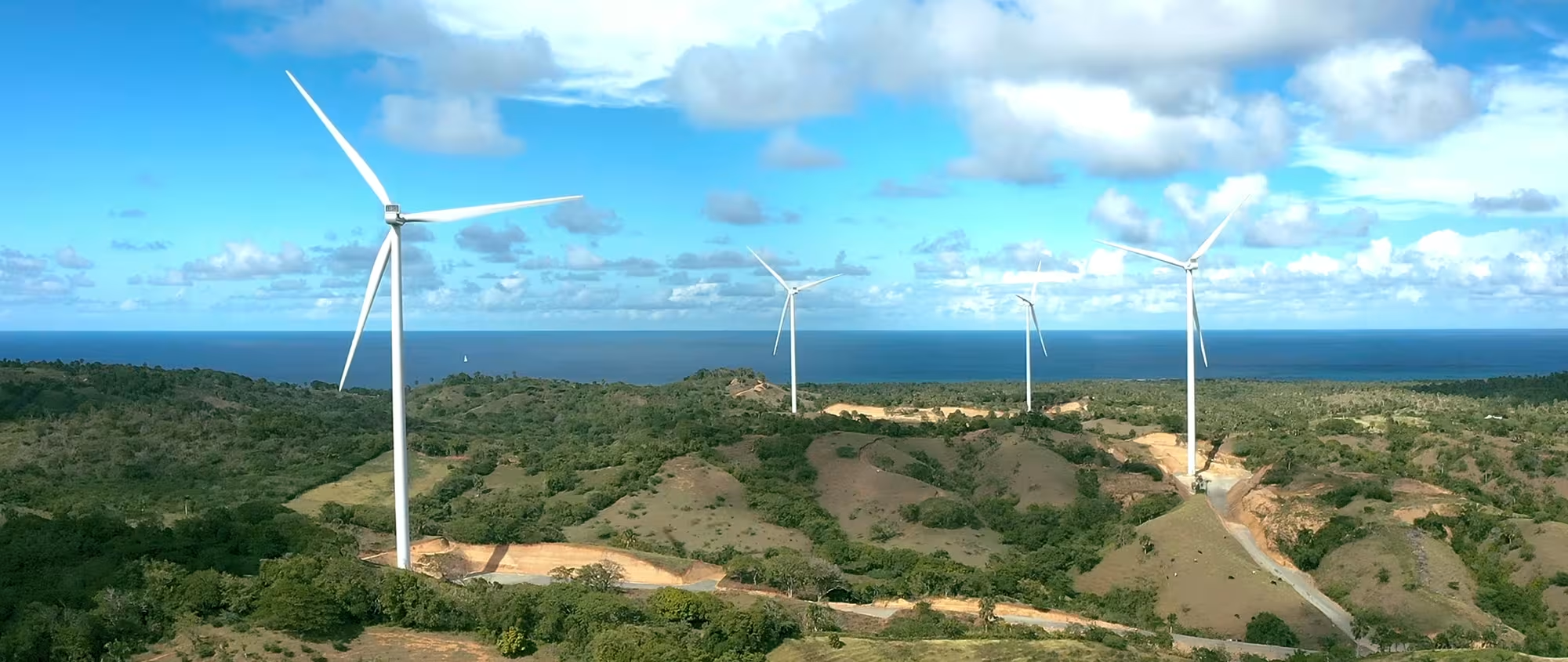
In the coastal region of Maimón, Puerto Plata, where steady winds sweep across the landscape, an opportunity emerged to reshape the Dominican Republic’s energy future. As demand for clean and reliable electricity continued to grow, Los Guzmancito wind farm was conceived as a large-scale solution capable of harnessing the region’s exceptional wind resources.
Developed in two phases, the project began with Phase A: the construction and commissioning of 16 wind turbines, delivering 57.6 MW of renewable capacity and reaching commercial operation in May 2020. Building on this success, Phase B expanded the project with 13 additional turbines and 46.8 MW, bringing the total installed capacity to 104.4 MW across 29 modern Vestas turbines.
Beyond increasing renewable generation, the vision for Los Guzmancito was ambitious. The project aimed to reduce carbon emissions, strengthen the national grid, and improve access to electricity for more than 170,000 people each year. Supported by Poseidón Energía Renovable S.A. and a group of experienced international and local investors, Los Guzmancito set out to become a reference point for sustainable infrastructure in the Caribbean.
Approach
Turning this vision into reality required a financing solution as solid as the winds powering the turbines. CIFI Asset Management, acting as Financing Manager, led the structuring of a long-term syndicated loan of up to USD 144.7 million, carefully designed to support the project’s expansion while ensuring financial resilience.
The financing was divided into two tranches. Tranche A, denominated in U.S. dollars, provided up to USD 90 million to refinance existing debt and cover early Phase B costs, including turbine procurement and construction start-up. Tranche B, structured in Dominican pesos, reached up to DOP 4.2 billion (approximately USD 54.7 million) and played a critical role in mitigating currency risk. Together, both tranches represented up to 58.4% of the project’s total budget, which reached USD 256 million.
A key milestone was the participation of the Investment Fund for the Development of Dominican Infrastructure I in Tranche B. Its involvement not only strengthened the local financing component but also reinforced alignment with international environmental and social standards. The loan terms, ten years for Tranche A and up to eighteen years for Tranche B, both with a 21-month grace period, were supported by sponsor guarantees and complemented by strong technical execution from RG Engineering and Vestas Wind Systems.
Throughout the process, CIFI and its partners applied rigorous due diligence, comprehensive risk management, and strict compliance with IFC Performance Standards and the Equator Principles, ensuring the project’s long-term sustainability.
Outcome
By the end of 2020, Phase A of Los Guzmancito was fully operational, generating 193 GWh of clean energy in its first year and avoiding more than 122,000 tons of CO₂ emissions. Over 121,000 people benefited directly from improved access to reliable electricity.
With the completion of Phase B, Los Guzmancito reached its full capacity of 104.4 MW, becoming one of the largest wind projects in the Dominican Republic. Today, the wind farm generates more than 304,000 MWh of renewable energy annually, avoids approximately 189,000 tons of CO₂ emissions each year, and provides electricity to more than 146,700 people.
Beyond its environmental impact, the project has contributed to local economic development by creating jobs and strengthening technical expertise in the region. Los Guzmancito stands as a powerful example of what can be achieved through strategic partnerships and innovative financing. Through the collaboration of CIFI Asset Management, the Investment Fund for the Development of Dominican Infrastructure, Poseidón Energía Renovable, and a dedicated network of professionals, the project is helping to build a cleaner, more resilient energy future for the Dominican Republic, and advancing the broader energy transition across the Caribbean.
304k MWh
Energy generated per year
147k people
Benefited from access to energy per year
189k tCO2e
Emissions avoided per year